
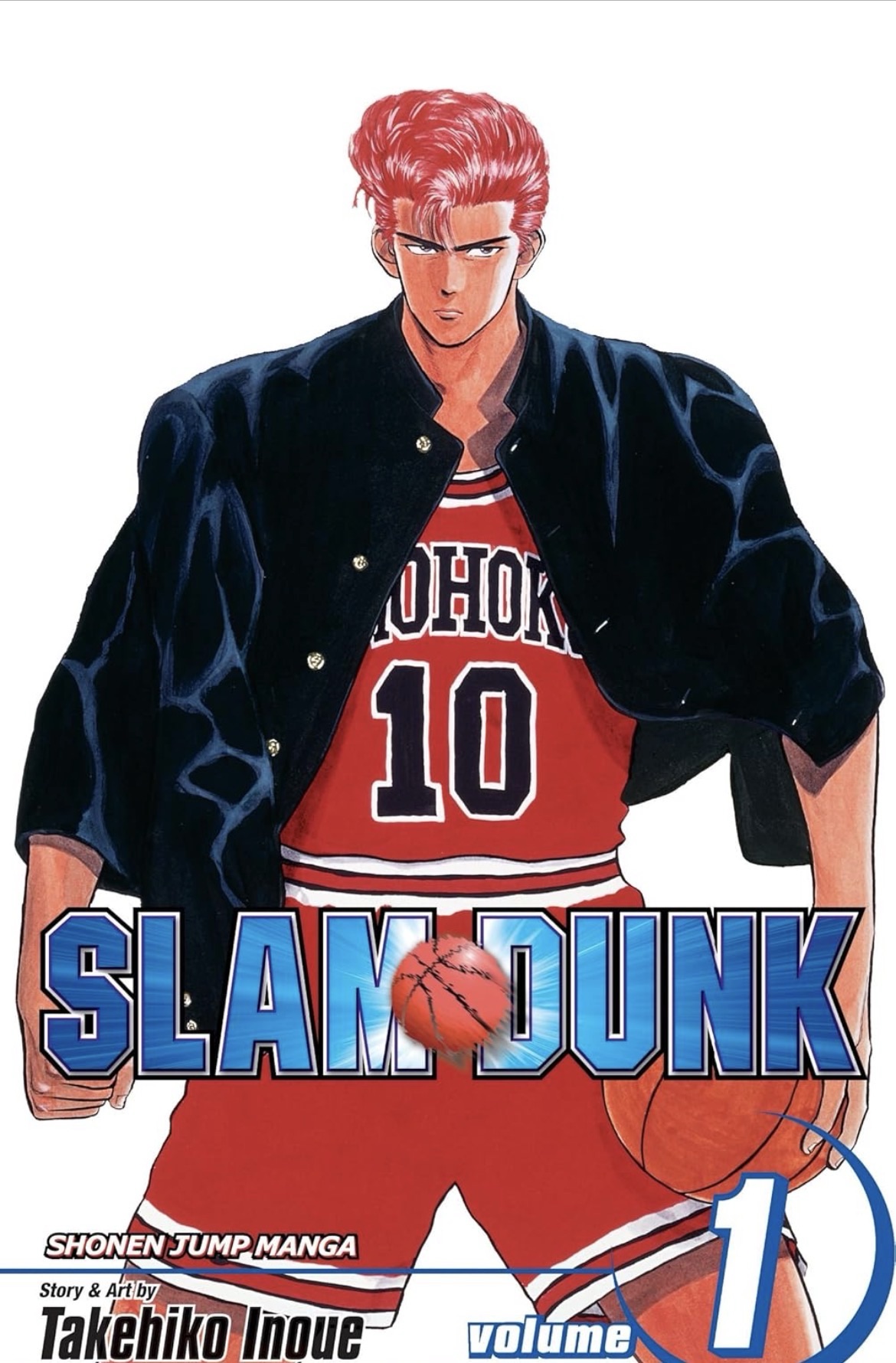
Title: SLAM DUNK
Genres: Sports/Basketball/School
Series: Completed
Volumes: 1 – 30
Grade level: 10-12
Reading age: 14 – 17 years
Review
Right now, Japanese basketball is wrapped in unprecedented excitement, with the booming success of the B-League (Japan’s professional basketball league) and the historic breakthroughs of the national team.
However, if you trace the “ultimate source” of it all, you will always arrive at one legendary masterpiece: Takehiko Inoue’s immortal manga, “SLAM DUNK”!
It has been many years since the series ended in 1996, but diving back into it amidst today’s basketball craze makes you painfully understand why this work has moved Japanese basketball and people’s hearts so deeply.
Today, I am going to introduce the overwhelming charm and modern-day value of this masterpiece, completely spoil-free!
The Shock That Sent Japan Running to the Gyms in an Era Without Even a Pro League
During “SLAM DUNK”‘s serialization from 1990 to 1996, a domestic professional league didn’t even exist yet. Basketball wasn’t at the top of the mainstream sports charts like it is now; it was an era where it still felt somewhat like a “hidden gem” of a sport.
It’s only in recent years that we’ve come to take for granted the sight of an enthusiastic professional league and a national team battling on the global stage.
Yet, despite that, this work sparked a massive basketball boom! Boys and girls who started playing basketball because of a manga (and honestly, I was one of them) later became players, coaches, and the professional and national team athletes who now support Japanese basketball. It is no exaggeration to say that “SLAM DUNK” tilled the soil of a Japanese basketball culture that didn’t even have a pro league yet, single-handedly nurturing the seeds of the future.
Unfiltered “Reality” and Human Drama, Not Just Fairy-Tale Endings
You won’t find the convenient clich’es common to sports manga here, like “just work hard and you’ll definitely win.” It is relentlessly real.
What it depicts is frustration, helplessness, jealousy toward overwhelming talent, and the awkward clashes and bonds between teammates. There are people called geniuses, and there are ordinary players shedding tears over their own limitations. Just as much as the joy of winning, the indescribable agony of losing and the struggles of teammates who can’t step onto the court are portrayed with raw realism.
That’s precisely why the sweat and tears shed by the characters don’t feel like someone else’s story – they hit us, the readers, deeply in the chest. Even if you’re not an athlete, everyone can relate it to their own lives and everyday walls, and get fired up! (There are scenes everywhere that will make you weep every single time.)
“Silent Dynamism” That Makes You Keep Turning the Pages
Takehiko Inoue’s true genius lies above all in his overwhelming artwork and staging!
During the game scenes, there is a vivid sense of realism, as if you can actually hear the loud bouncing of the ball right in front of you, the heavy breathing of the players, and the heat of the gymnasium. In particular, scenes of intense pressure where dialogue is stripped away to the absolute limit and the story is carried purely through continuous panels feel so powerful they seem to break the limits of the manga medium.
Once you start turning the pages, you get swept up in the speed of the story, experiencing the thrill of sitting right there in the stands of the exact same court. There really is no other manga quite like this.
Touch the Origin of All This “Frenzied Passion”
Even if you don’t know the rules of basketball, if you know the harshness of sports and the brilliance of youth, “Slam Dunk” is a book that will undoubtedly shake your soul.
If you’re someone who is currently heading out to B-League arenas or cheering wildly for the national team in front of the TV, I want you to experience this “origin.” It will definitely make the sport of basketball unfolding right before your eyes feel that much more beloved and profound.
Why not welcome this “textbook that sets your heart on fire,” handed down across the ages, onto your own bookshelf?
Comments